Playtime is Training Time: The Enrichment Connection
The most successful pet creations are not just things to occupy your pet; they are tools for enrichment and training. Enrichment is the process of providing mental and physical stimuli that allow an animal to express its natural, species-specific behaviors, such as sniffing, foraging, chewing, and hunting. When you connect a DIY project to a core training goal, you turn a few minutes of play into a powerful lesson in focus, confidence, and impulse control.
At its core, all training relies on positive reinforcement—rewarding a desired behavior. Our DIY creations are the delivery system for those rewards, integrating the joy of play with the rigor of learning.
We break down how simple DIY creations can be used to practice the five pillars of effective pet training.
1. The Cardboard Tube Treat Puzzle: Mastering Impulse Control & Problem-Solving
As mentioned in Post 1, the cardboard tube stuffed with treats is an easy puzzle. However, its true power lies in its application for training.
- The Training Goal: Impulse Control. Instead of just handing the toy over, use it as a tool to teach self-regulation.
- The Setup: Hold the treat-stuffed tube in your hand.
- The Wait: Before presenting it, ask for a “Sit” or a “Wait.”
- The Release: Only when the dog is calmly waiting, give the command “Take it” or “Find it.”
- The Enrichment: The act of figuring out how to destroy the cardboard to get the reward engages the problem-solving centers of the brain. The physical effort is tied directly to the reward, reinforcing patience and focus.
2. The Braided T-Shirt Chew: Focus and Tug Rules
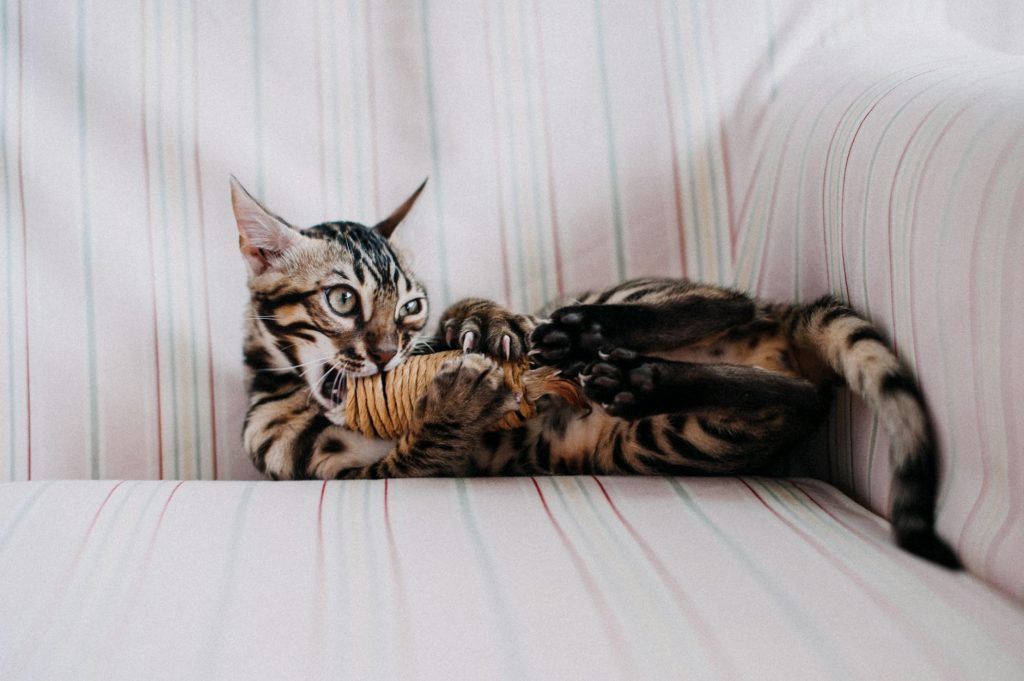
The braided chew is a staple for satisfying the natural desire to tug and shred. Used correctly, it becomes a crucial tool for teaching clear communication and “off” commands.
- The Training Goal: The “Drop It” Command. A game of tug is pointless if your pet won’t let go when asked.
- The Play: Engage in vigorous tug play.
- The Command: In the middle of the game, stop moving the toy and give a calm, firm “Drop It.”
- The Reward: The instant your pet releases the toy, reward them with a small, high-value treat (or immediately re-engage in tug play!).
- The Result: The dog learns that “Drop It” does not mean “The game is over,” but rather “Do this to make the game better!”
3. The Water Bottle Sock Toy: Building Confidence and Reducing Fear
For timid or nervous pets, toys that make noise or are slightly unpredictable can be intimidating. The crinkle of the water bottle sock toy is an excellent, low-stakes way to practice desensitization.
- The Training Goal: Confidence Building. The goal is to associate the novel, scary sound with a fun, positive outcome.
- The Introduction: Start by gently tapping the toy to make a soft crinkle noise while your pet is eating their dinner or receiving a steady stream of treats.
- The Association: Toss the toy just a foot away. If your pet approaches it, give high praise and a reward.
- The Outcome: The dog slowly learns that the loud, crinkly sound is a cue for fun and reward, not danger, significantly increasing their tolerance for unexpected noises in the home environment.
4. Simple Rain Boots (Training Tool, Not just Fashion)
The idea of making rain boots from simple materials might seem purely practical, but they are a phenomenal training aid for desensitization to novel textures and sensory enrichment.
- The Training Goal: Accepting Paw Handling. Many dogs dislike having their feet touched. Boots necessitate handling.
- The Setup: Introduce the boot slowly, first by rewarding your pet for touching it, then for resting a paw on it.
- The Practice: Reward heavily for allowing the boot to be placed on a single paw for just a few seconds. The reward must always be high-value.
- The Enrichment: Walking in boots is sensory enrichment! The unique, squishy feel on their paws engages a different part of their nervous system, making a familiar walk a brand new mental exercise.
5. No-Sew Comfort Mat: The Power of Place
A comfortable, customized “place” mat or blanket (Post 5) is one of the most powerful training aids for teaching calmness and stationing.
- The Training Goal: Stationing and Calmness.
- The Command: Teach your pet the “Go to your mat” or “Place” command.
- The Duration: Start by rewarding them for lying down on their custom mat for just 5 seconds, then 10, then 30, and so on.
- The Value: The custom mat is their safe space. It travels with them and is a cue for relaxation. You are using your handmade creation to teach a vital life skill: how to settle and be calm during times of excitement or stress.
By consciously linking your DIY creations to specific training objectives, you move beyond simple play and engage your pet in a rewarding, lifelong journey of learning and enrichment.